Software development
Web apps, SaaS and AI products
Build your web app, SaaS or AI product from an agreed plan. The work can include the interface, backend, sign-in, data, integrations, testing and release.
Before we start. The proposal identifies the features, integrations and release work included. New features, provider charges and ongoing support are agreed separately.
The purpose
Expected outcomes
- An agreed product scope and user journey
- Working application features in reviewable stages
- Testing, release checks and a source handover
Agree the work
Scope and what I need from you
Start with a description. Access to private systems or files is arranged only after the work and handling terms are agreed.
Useful information for the discussion
- The problem and intended users
- Existing designs, code or integrations
- The first release priorities and budget
Before the first reply
What I'll ask you.
A first release is planned around who it is for and what it must do on day one.
- What problem does the product solve, and for whom?
- What exists already?Designs, code, a prototype or integrations.For example: Figma designs for 8 screens and a Stripe account
- What must the first release do?The few things without which it isn't worth launching.
- How many users do you expect at launch?For example: A pilot with 30 clients
- Which other services must it connect to?For example: Stripe, Google sign-in, HubSpot
Explore the process
How the work happens
An illustrated example, from the first request to handover.
A small team needs a customer portal
Use the steps below to inspect the work and expected output.
Step 1 of 4
Define the first useful release
Identify the users, main tasks and necessary data. Agree what belongs in the first release and what can wait.
An accepted scope and first-release plan.
Step 2 of 4
Implement one complete user path
Build the interface, sign-in, data and integrations needed for the agreed journey. Review working increments instead of waiting for a final reveal.
A usable path through the application.
Step 3 of 4
Test the normal and failure cases
Check permissions, input errors, provider failures and the main phone and desktop journeys against the agreed requirements.
Recorded acceptance checks and prioritised fixes.
Step 4 of 4
Release and explain how to operate it
Check the deployment and provide the agreed source, configuration notes and operating documentation.
A checked release and source handover.
The handover
What you receive.
The agreed handover draws from these deliverables:
- Requirements, assumptions, architecture and acceptance checks
- Responsive frontend and backend implementation
- Data, APIs, sign-in and integrations
- Security and SEO checks, testing, release and handover
Outstanding issues and agreed next steps are recorded with the handover.
Measured on ChaseInTech
PageSpeed results from this website.
The Articles page moved from 75 to 99 in mobile PageSpeed tests after improvements to image delivery and loading. The original screenshots and reports are below.
Before · Mobile
Articles page · 18:38 UTC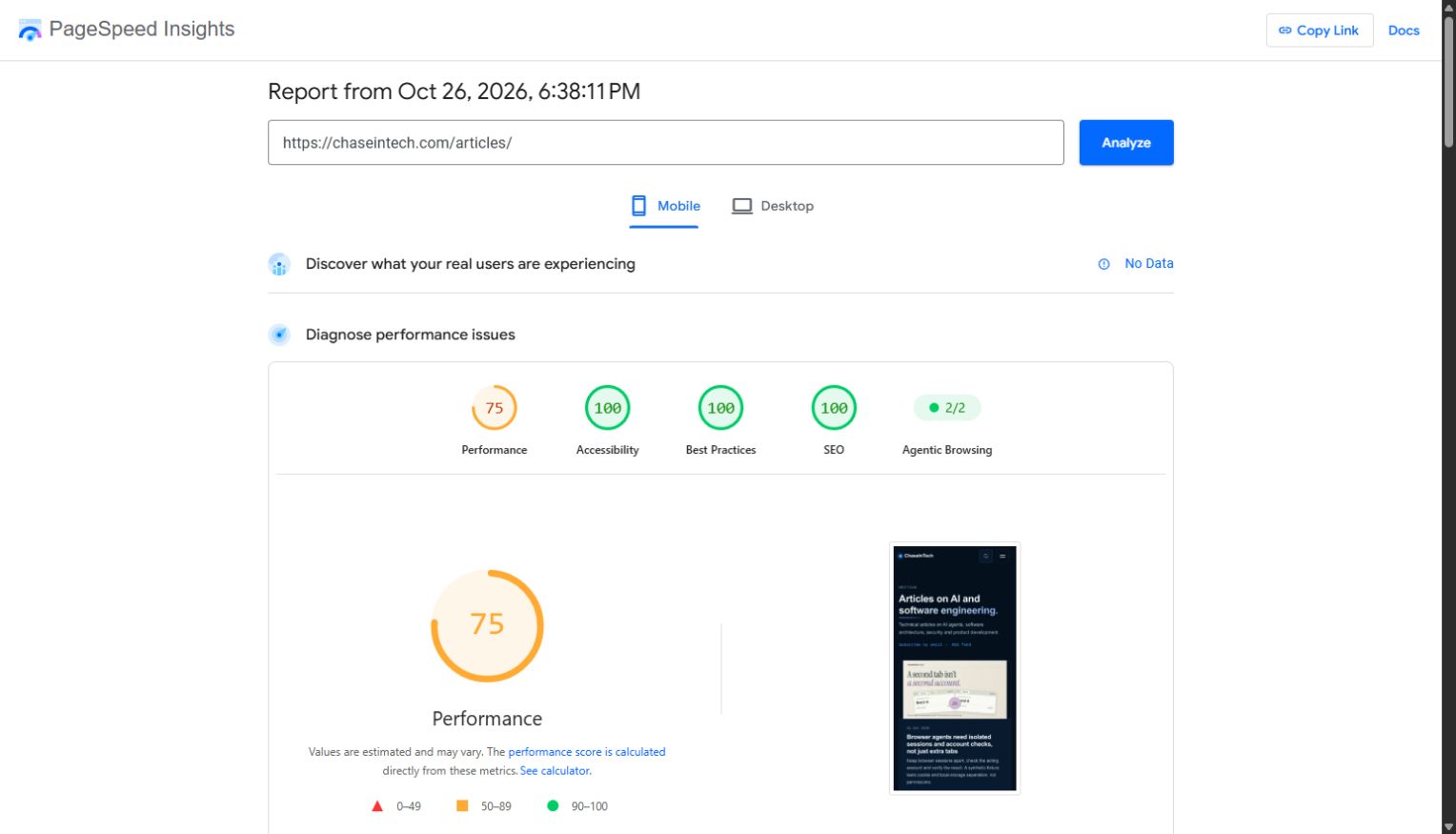
Performance · Largest Contentful Paint 6.75 s
Before mobile report Full screenshotAfter · Mobile
Articles page · 22:16 UTC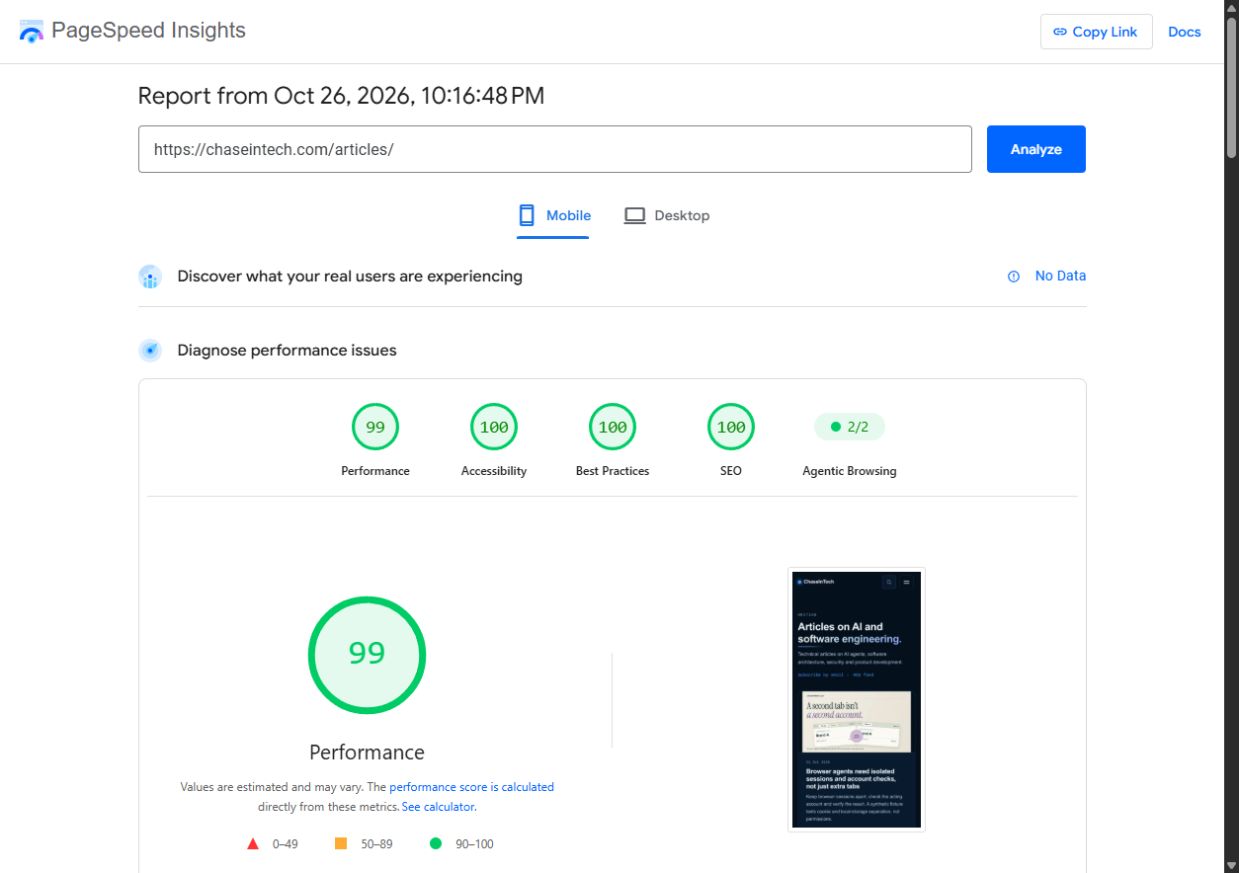
Performance · Largest Contentful Paint 1.69 s
After mobile report Full screenshot6.75 s → 1.69 sLargest Contentful Paint in the mobile Articles tests
Responsive images, earlier discovery of opening media and deferred gallery loading reduced the work needed for the first view. The full-size source media and site animations were retained.
A separate desktop result
Homepage: four scores of 100
Google PageSpeed Insights · 26 October 2026 · 22:22 UTC
- Performance
- 100/100
- Accessibility
- 100/100
- Best Practices
- 100/100
- SEO
- 100/100
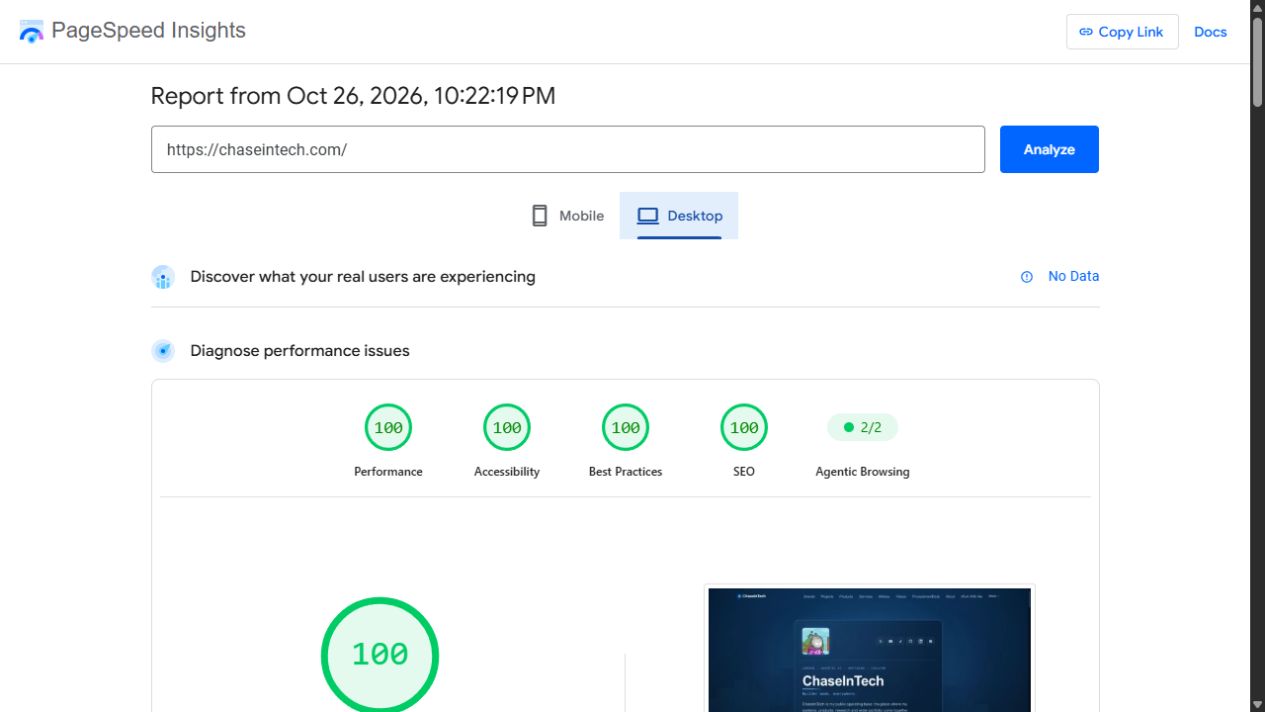
These are individual lab tests from 26 October 2026. Scores vary with test conditions. The Articles SEO score was already 100 before the speed improvements and stayed at 100 afterwards. Automated SEO checks cover technical basics; search rankings, traffic and sales need separate measurement.
Inspect related work
Examples you can review.
Opus Vela Studio
One creative project shared by the editor and developer tools, with a record of changes.
The project record includes its current status and verification notes.
Read the Opus Vela Studio project record →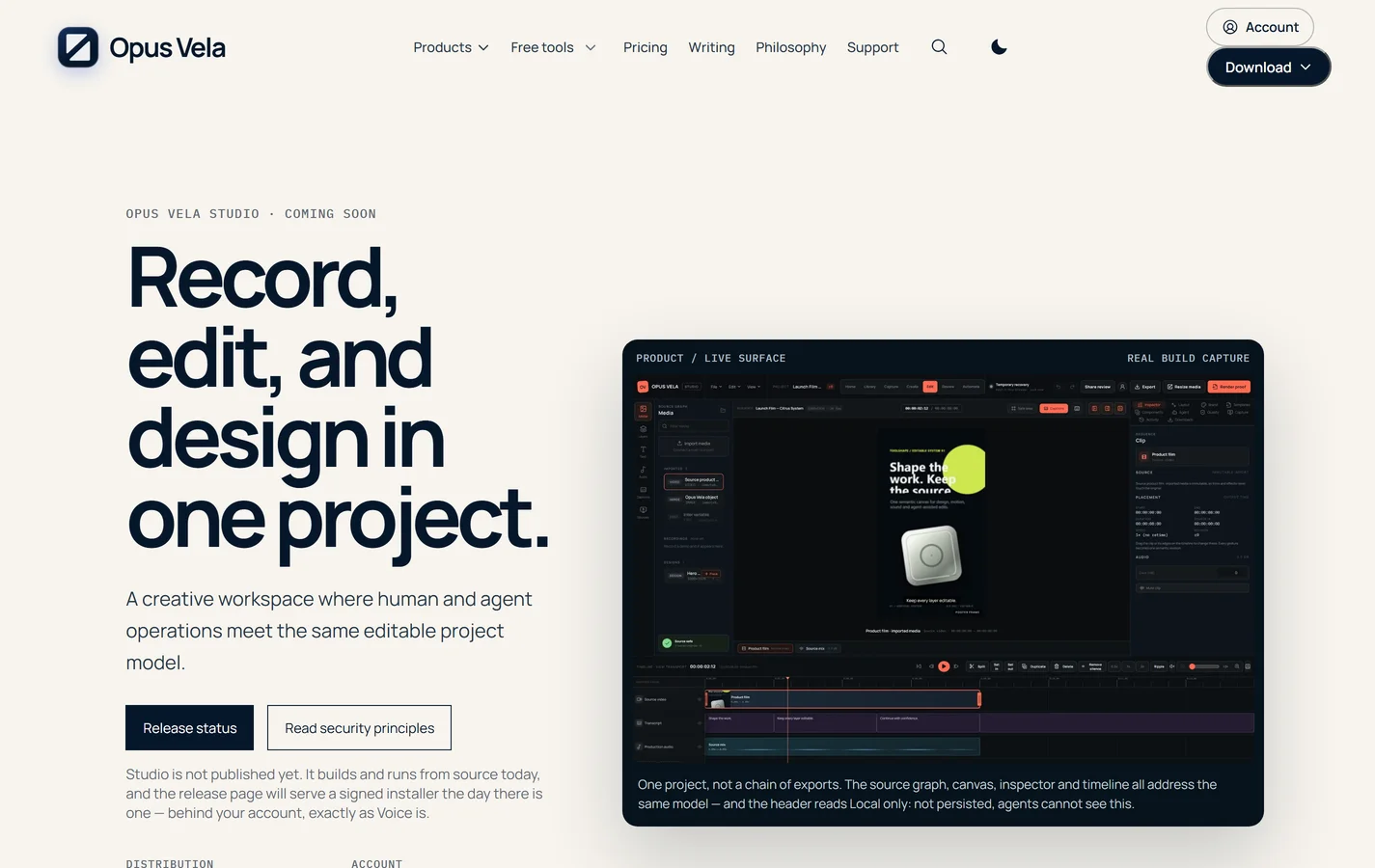
Before you enquire
Common questions.
Can you continue an existing application?
Yes. Existing work starts with a codebase and deployment review so the proposal can identify what is reusable and what needs attention.
What will you ask me before we start?
A first release is planned around who it is for and what it must do on day one. The 5 questions are listed on this page under "What I'll ask you". You can answer them on the enquiry page, then email or copy the brief.
How is the final price agreed?
The catalogue price is a starting point. The proposal confirms the scope, delivery stages, fees, provider costs and acceptance checks before work begins.
What happens after delivery?
You receive the agreed handover and remaining-issue notes. Additional features, continued operation and support are scoped separately.
Get in touch
Tell me what you need.
Describe the current system, the outcome you want, your timeline and a rough budget. Do not include credentials or private files in the initial enquiry.