Build log
Solo Operator AI Workspace: replacing promo graphics with product proof
How a terminal-heavy storefront identity became an editorial product story built from real customer artefacts.
Source: Public ChaseInTech product surface and production-verified typography, media and browser QA record
Technical bibliography record
The build, in five parts.
- 01 Built
- A six-frame proof atlas, silent captioned motion preview and cache-busted product identity using real workspace artefacts.
- 02 Process
- The live storefront weakness was reproduced, typography roles were formalised, media was rebuilt deterministically and checked at full, marketplace and compact sizes.
- 03 Learned
- Technical metadata can be evidence without being the marketing voice; the strongest product image shows the working system first.
- 04 Skills
- editorial typographyproduct mediamotion captionsstorefront QAvisual contracts
- 05 Saved
- Source frames, typography contract, motion manifest, hashes, regression tests and live desktop/mobile readback.
Visual QA and product evidence
See the milestone, not only the summary.
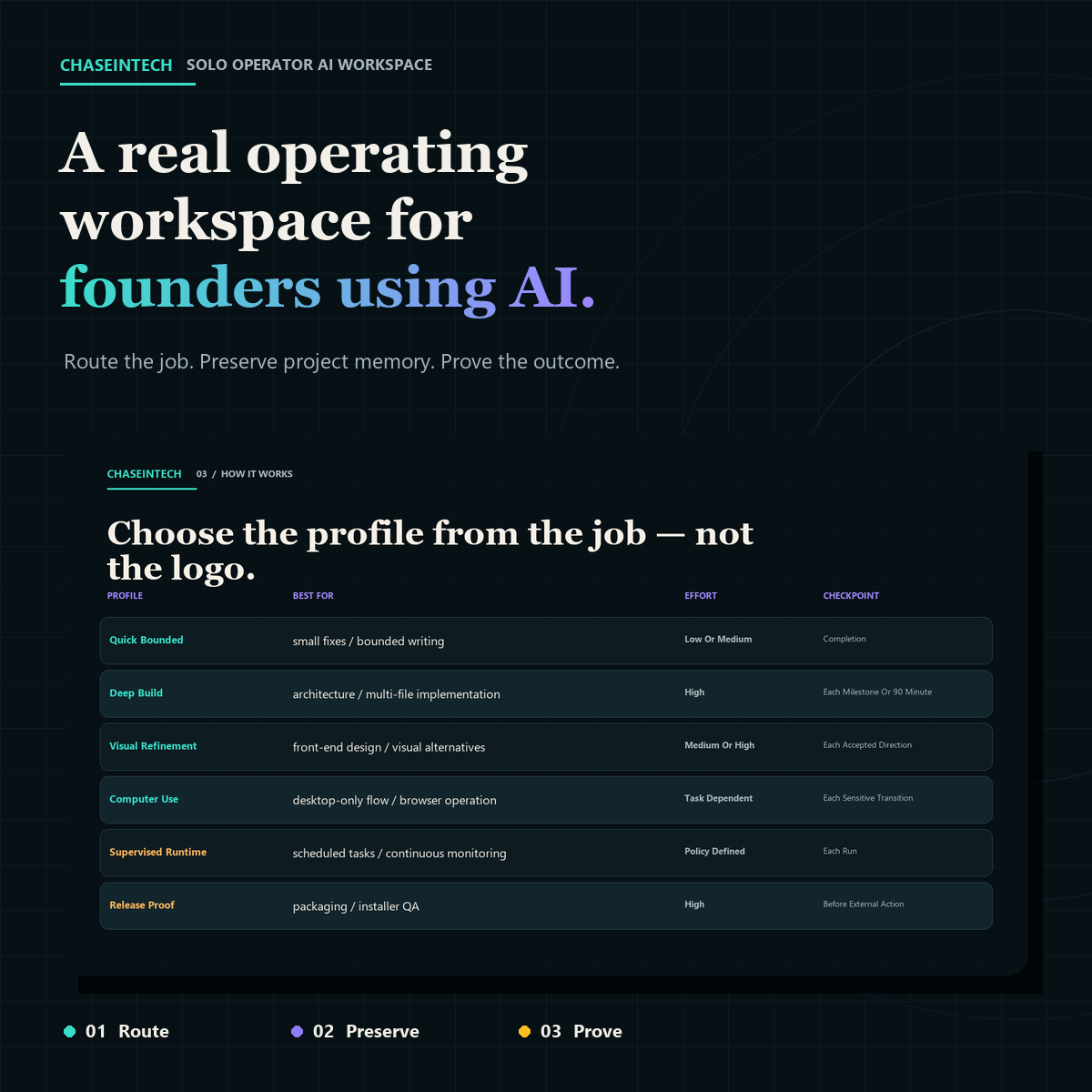
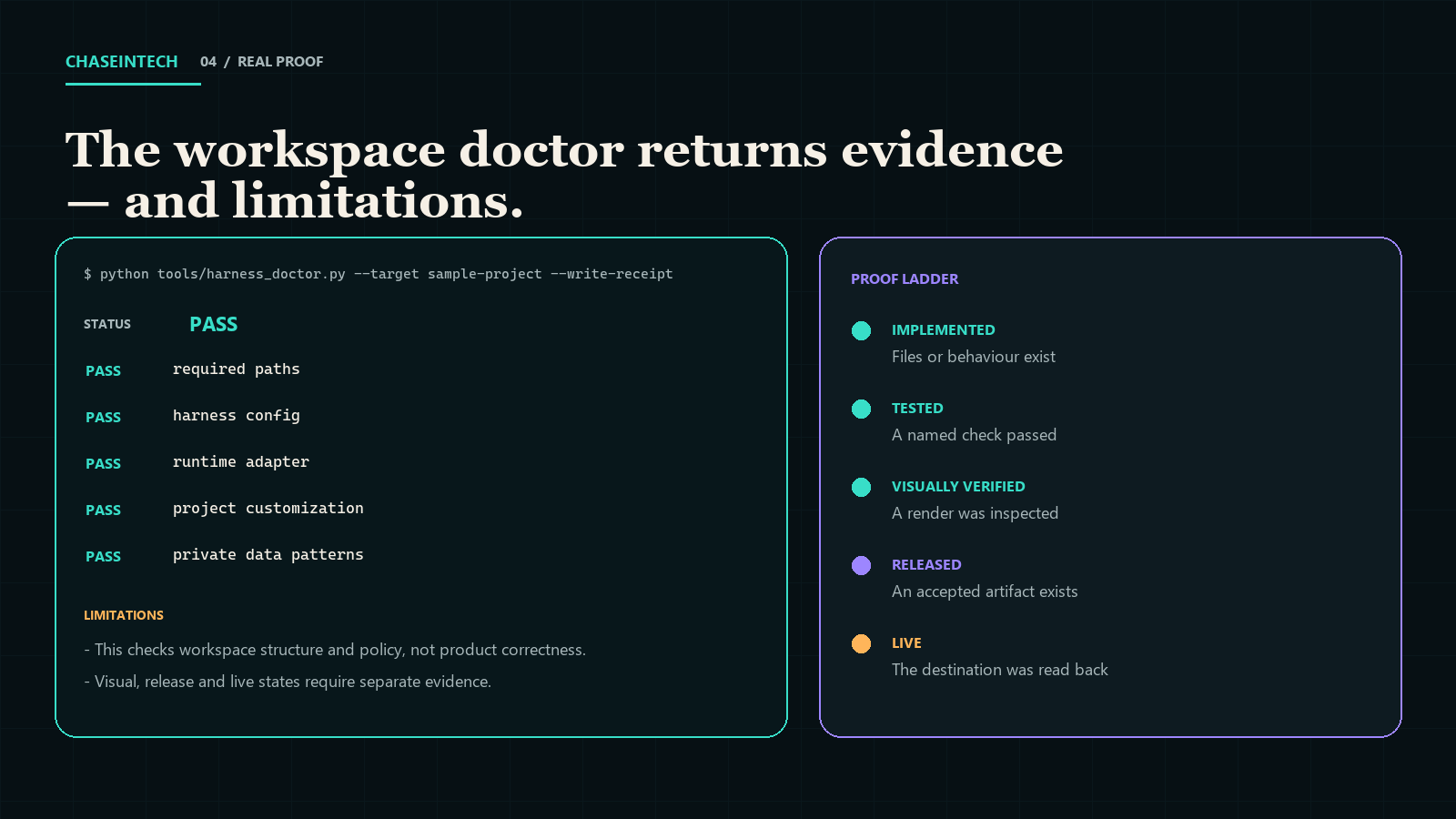
The transition#
The earlier identity treated monospace, version labels, licence stamps and proof-state chips as the primary sales language. The replacement uses editorial display type, a readable interface face and real customer artefacts, while keeping monospace inside literal technical evidence.
Visual QA#
Ten deterministic frames, MP4/WebM motion, poster and captions were checked at 1600 by 900, a 637 by 359 storefront frame and a 320 by 180 compact view. The production catalogue and detail routes were then verified with the new cache-busted assets and zero horizontal overflow.
What carried forward#
The reusable rule is to make the artefact prove the claim. Version, price and licence data belong in supporting interface copy; the first visual should communicate the product's working model.