01 / Question
Start with a real constraint
A slow workflow, an unreliable tool or a question from actual use. Record who needs the outcome and what would count as an improvement.
What stays behindProblem + success criteria
Engineering build journeys
Latest builds, lessons and progress across my projects.
Subscribe via RSS →Inside the process / 01—04
ChaseInTech is the public record. ChaseOS provides the context and governance behind the work. Each build connects a real problem to a result you can inspect.
The working loop
Illustrated workflow · select a stage to explore it
01 / Question
A slow workflow, an unreliable tool or a question from actual use. Record who needs the outcome and what would count as an improvement.
02 / Research
Read primary sources, inspect existing systems and compare approaches. Keep dates, source links and uncertainty attached to each claim.
03 / Build
Turn a hypothesis into a bounded implementation. Preserve the decisions and trade-offs so the next change has a starting point.
04 / Review
Check behavior, inspect the rendered experience and record failures. A successful local test and a verified production release are different milestones.
05 / Retain
Write the milestone, connect it to its project and keep the reusable lesson. Private knowledge promotion and public publication each need their own review.
How the pieces fit
The products below exist; this complete cross-product flow is a proposed pattern, not a live run.
Outcome · constraints · evidence needed
Retrieve context · scope the task · check permissions
Claims and uncertainty
Changes and test evidence
Failures and acceptance checks
Accept · revise · stop
Runtime profiles, scoped permissions and an explicit approval gate.
Inspect the architecture ↗Existing projectSource-linked work with claims, evidence, uncertainty and an activity record.
Inspect the project ↗Existing projectReview recorded runs and preserve ratings, decisions and corrections.
Inspect the review loop ↗Use one worker for a narrow task. Split independent work only when coordination helps. Retrieved context informs a decision; it does not grant permission to act.
A map with provenance
A mind map explains the relationships. The linked records make them inspectable.
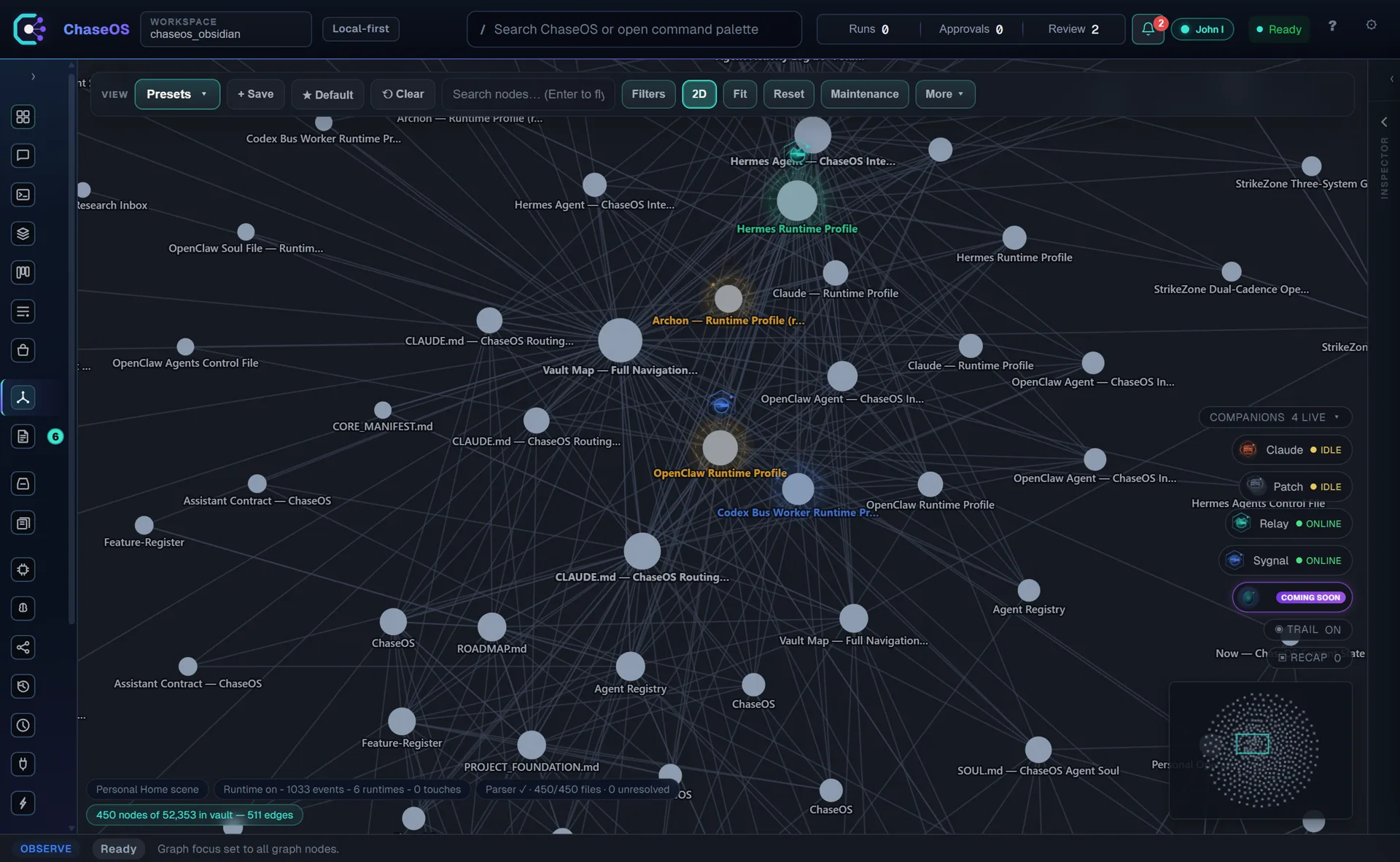
ChaseOS project records show a graph of documents, projects and runtime profiles. A future worker can use reviewed, relevant records to orient its work.
The proposed next step is a repeatable path from build evidence to reviewed knowledge. Automatic ingestion of every build log is not verified here.
Evidence behind the direction
Selected foundations and recent directions · sources checked 9 September 2026 · not an exhaustive survey
Research paper · NeurIPS 2020
Lewis et al. combine retrieval with generation for knowledge-intensive tasks. This motivates source-linked context; it does not establish the performance of ChaseOS.
Read the RAG paper ↗Engineering practice · Dec 2024
Anthropic distinguishes predefined workflows from model-directed agents. Use parallel workers where the task separates cleanly; extra coordination has a cost.
Read the architecture patterns ↗Engineering direction · Apr 2026
Managed Agents separates the session record, harness and execution environment. The design lesson here is recoverable records and replaceable workers—not an integration claim.
Read the engineering report ↗Research report · 2026
Anthropic’s AI-organization experiments found effectiveness and alignment trade-offs in tested settings. Outcomes depend on the model and setup; evaluate the complete workflow.
Read the study and limitations ↗Source → hypothesis → small experiment → measured result → review. A paper or provider report is a reason to investigate, not proof that the same result holds in my systems.
Building a local storage explorer meant fixing the map, the restart path and the delivery path—not just drawing a polished interface.
Open the build journey →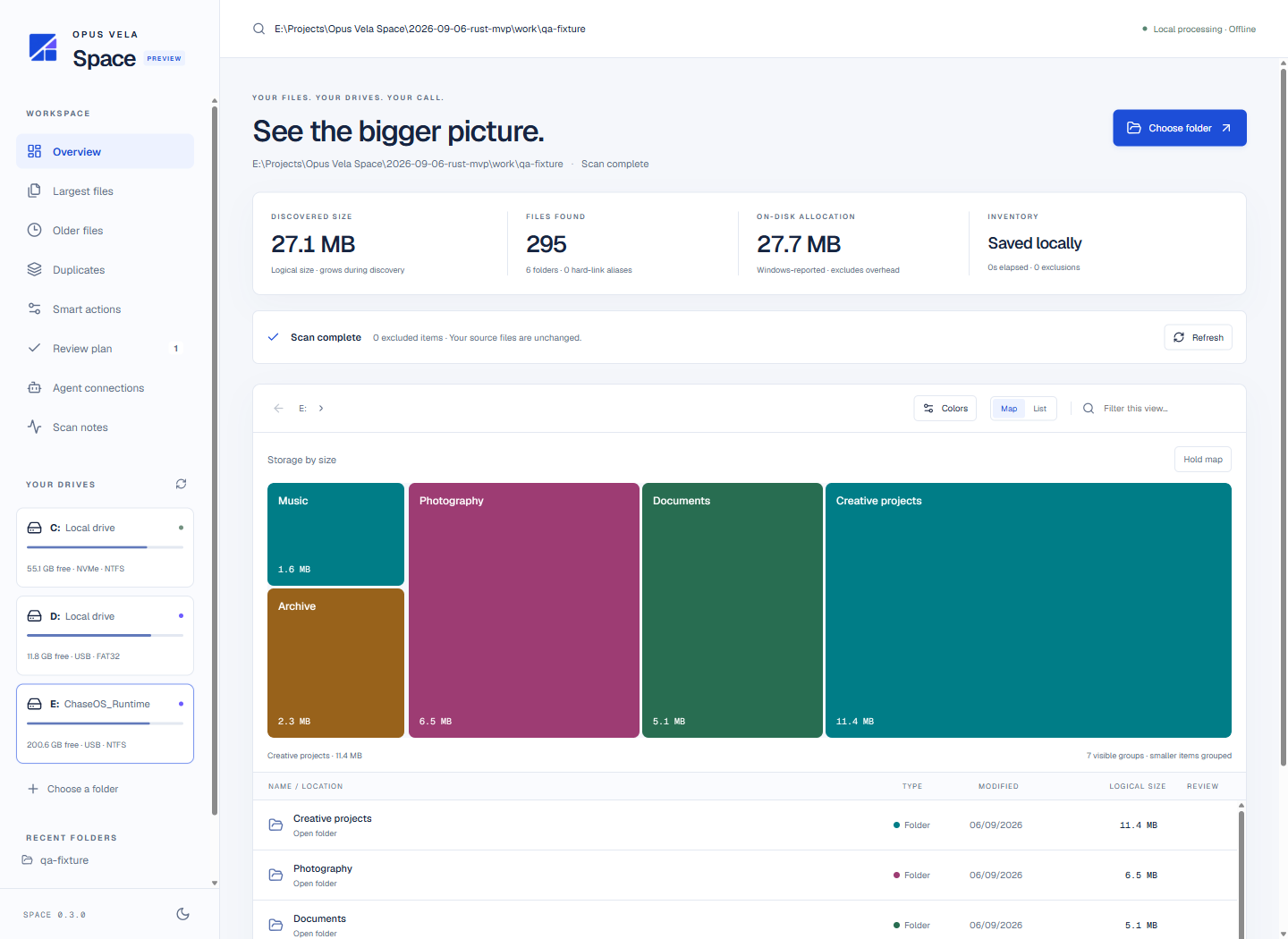
How Product 4 became a working app launch check kit, a prominent commercial walkthrough, and a live £59 buying route without pretending a public listing proves paid-buyer delivery.
Open the build journey →
How a 111-deliverable release system was made navigable for agentic builders while keeping the design, executable harness, publication and buyer-delivery proof states separate.
Open the build journey →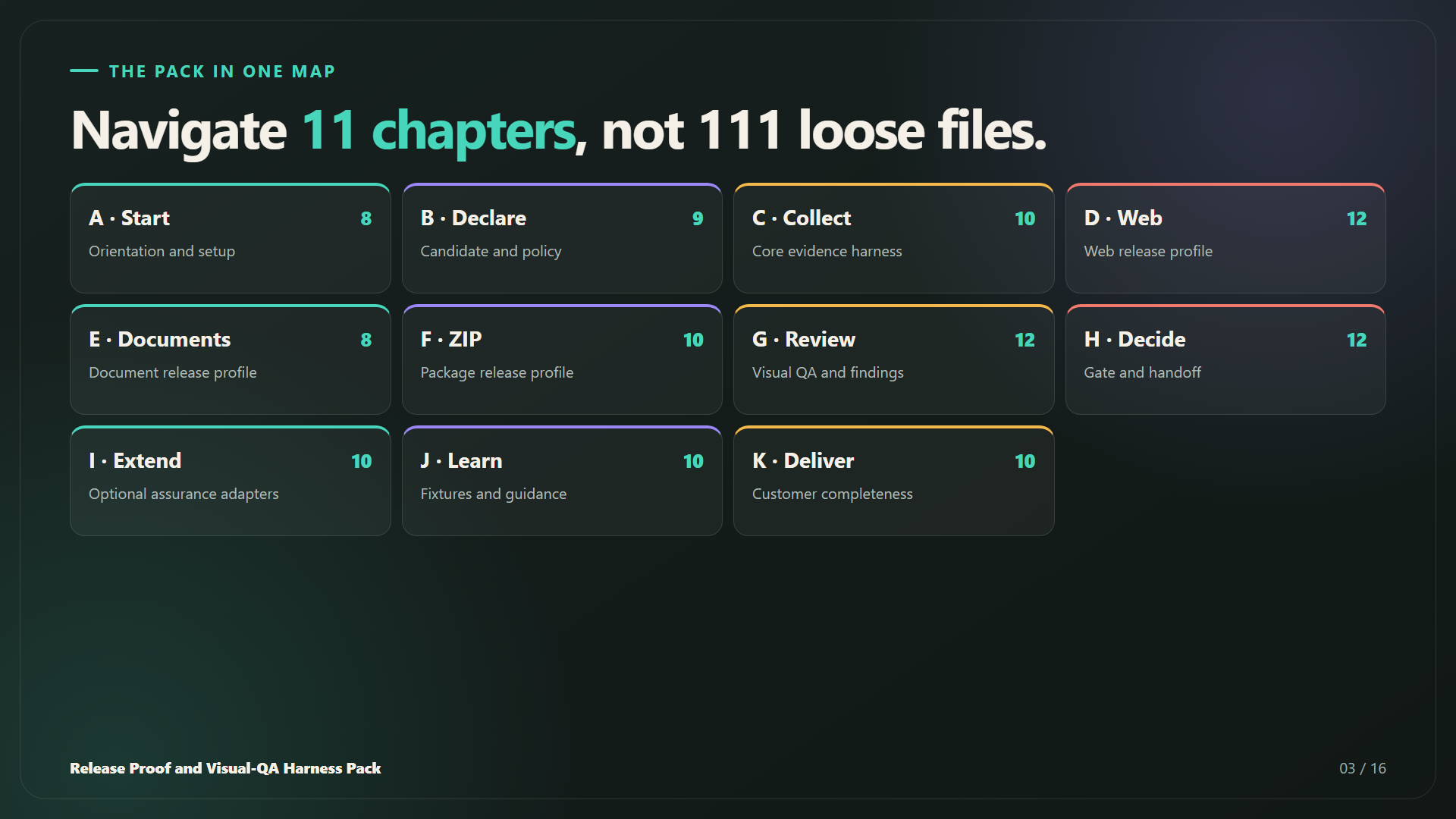
How V1.1.0 made knowledge intake inspectable and tied the public download, updater, installed app and visual evidence to the same signed Windows release.
Open the build journey →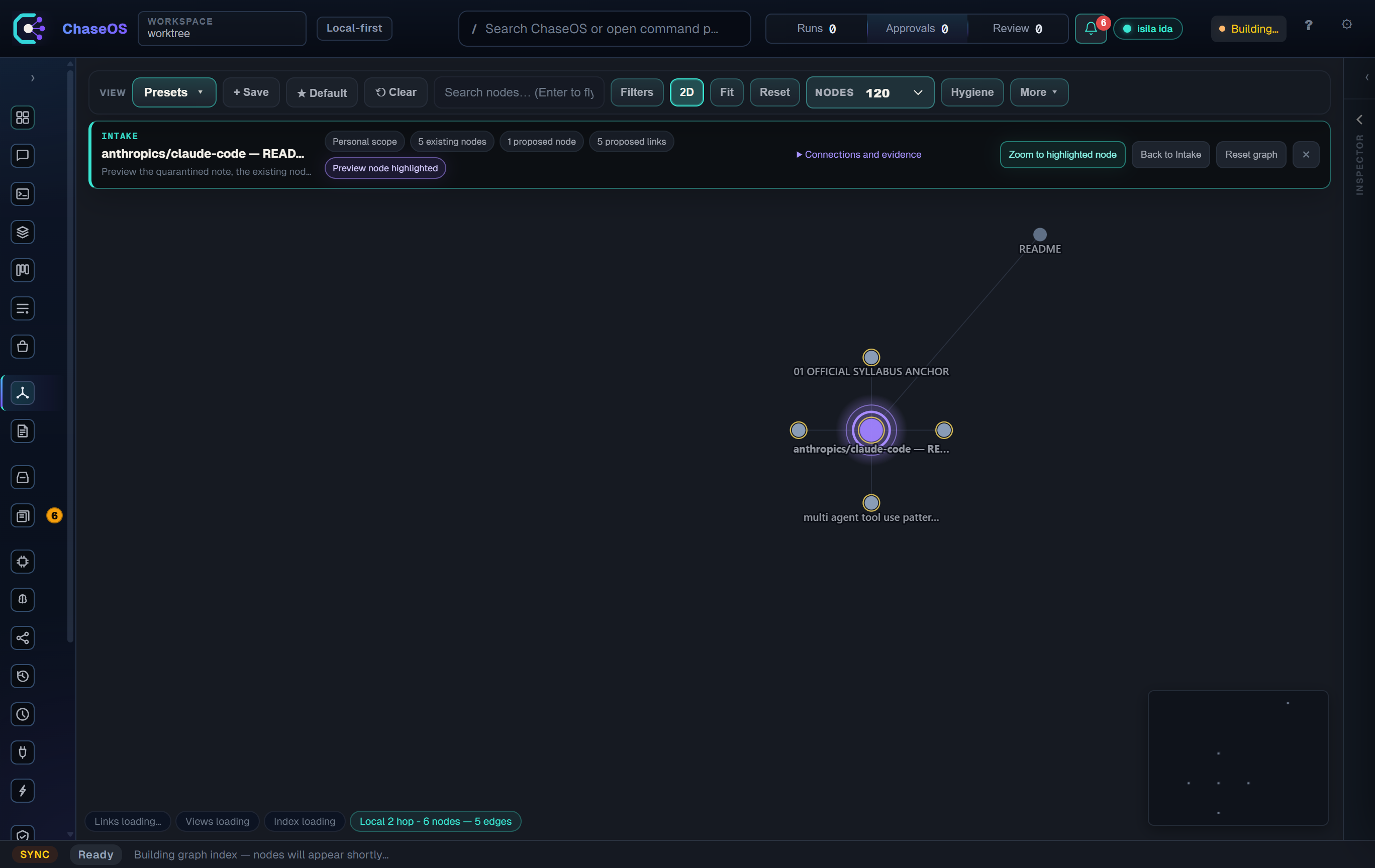
How V1.0.9 tightened the Intake and Research review flow, made approval origins legible, and reconciled local runtime state without presenting observation as a live connection test.
Open the build journey →How the site grew from a project list into a connected system for products, services, case studies, responsive media and evidence-backed enquiries.
Open the build journey →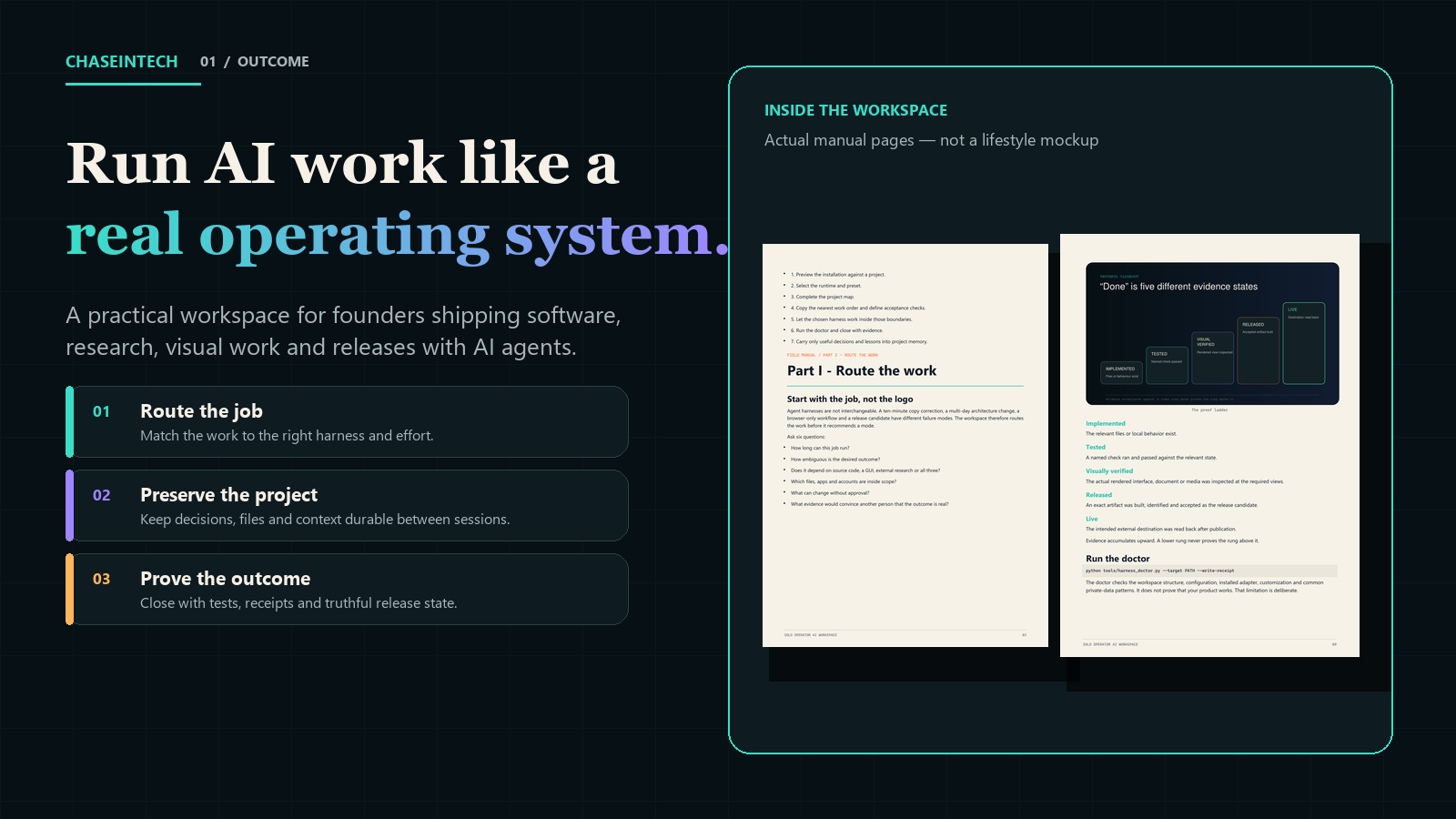
20 Aug 2026 → 25 Aug 2026
Why a new version number was not enough—and how installer identity, public delivery and the real in-app update notification were verified as one release contract.
Open the build journey →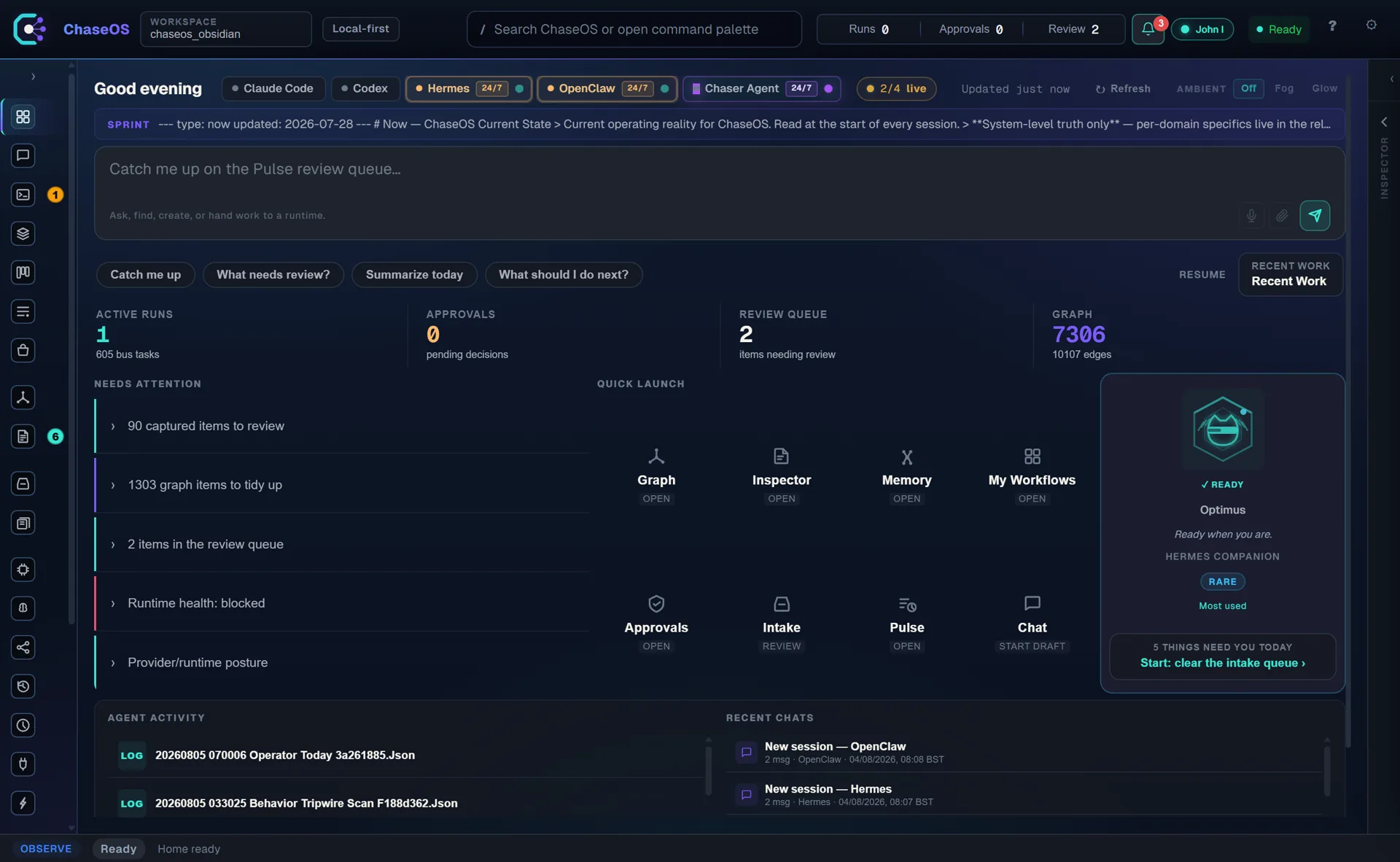
How a terminal-heavy storefront identity became an editorial product story built from real customer artefacts.
Open the build journey →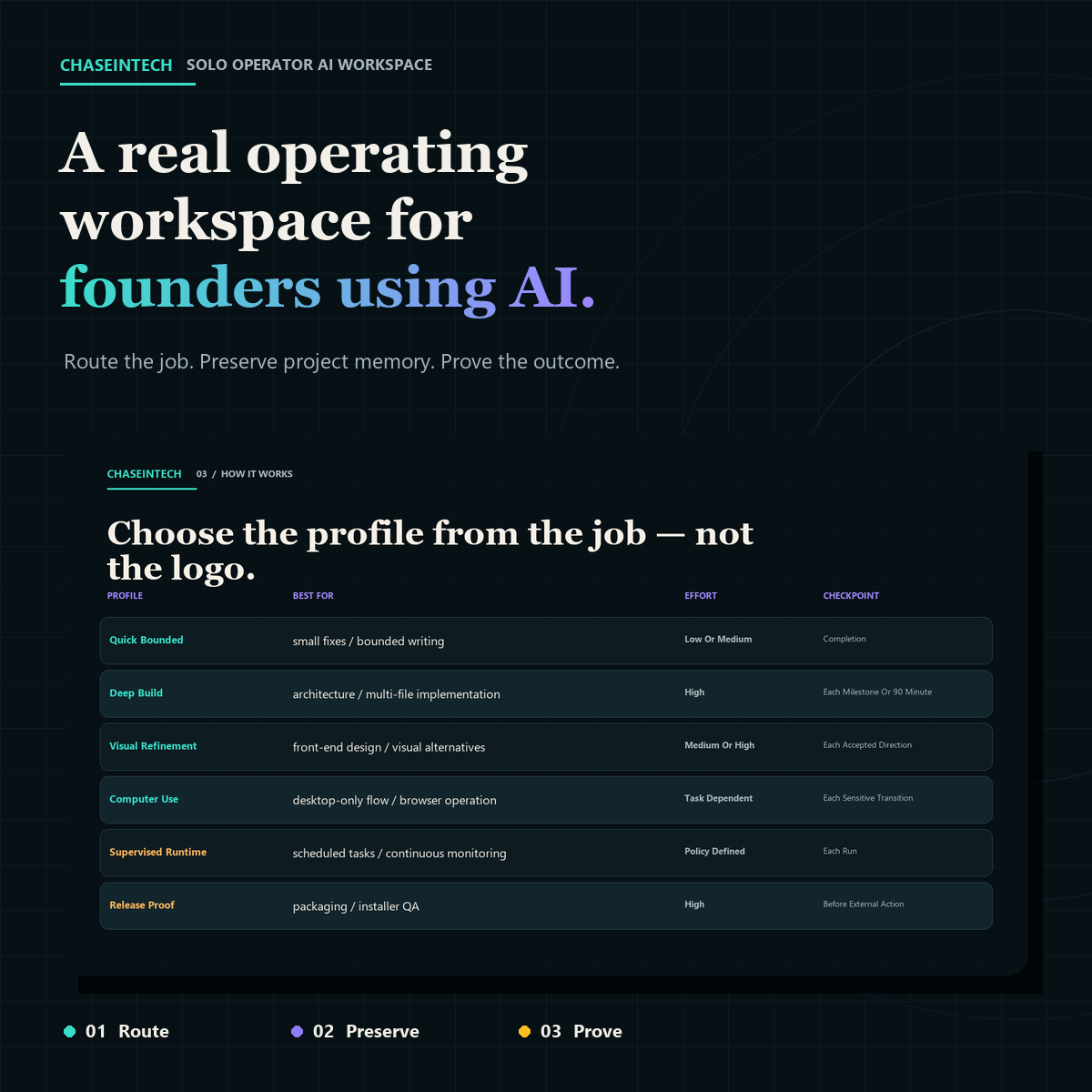
21 Aug 2026 → 24 Aug 2026
How Voice joined signing, immutable downloads, updater verification, installed-payload parity and Windows taskbar identity into one release acceptance path.
Open the build journey →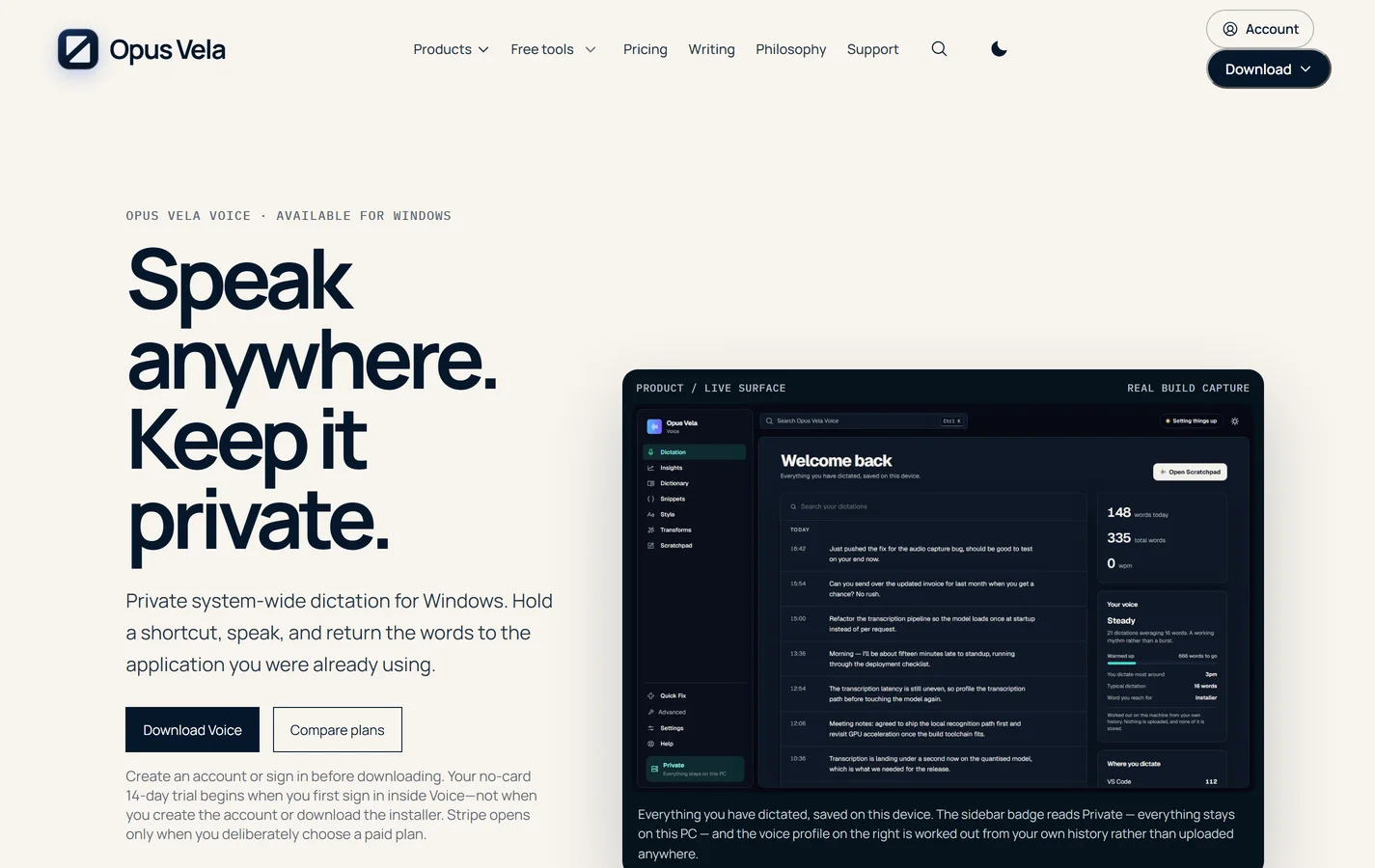
20 Aug 2026 → 24 Aug 2026
Why a reseller's measured business performance and external market research needed different routes, data meanings and proof standards.
Open the build journey →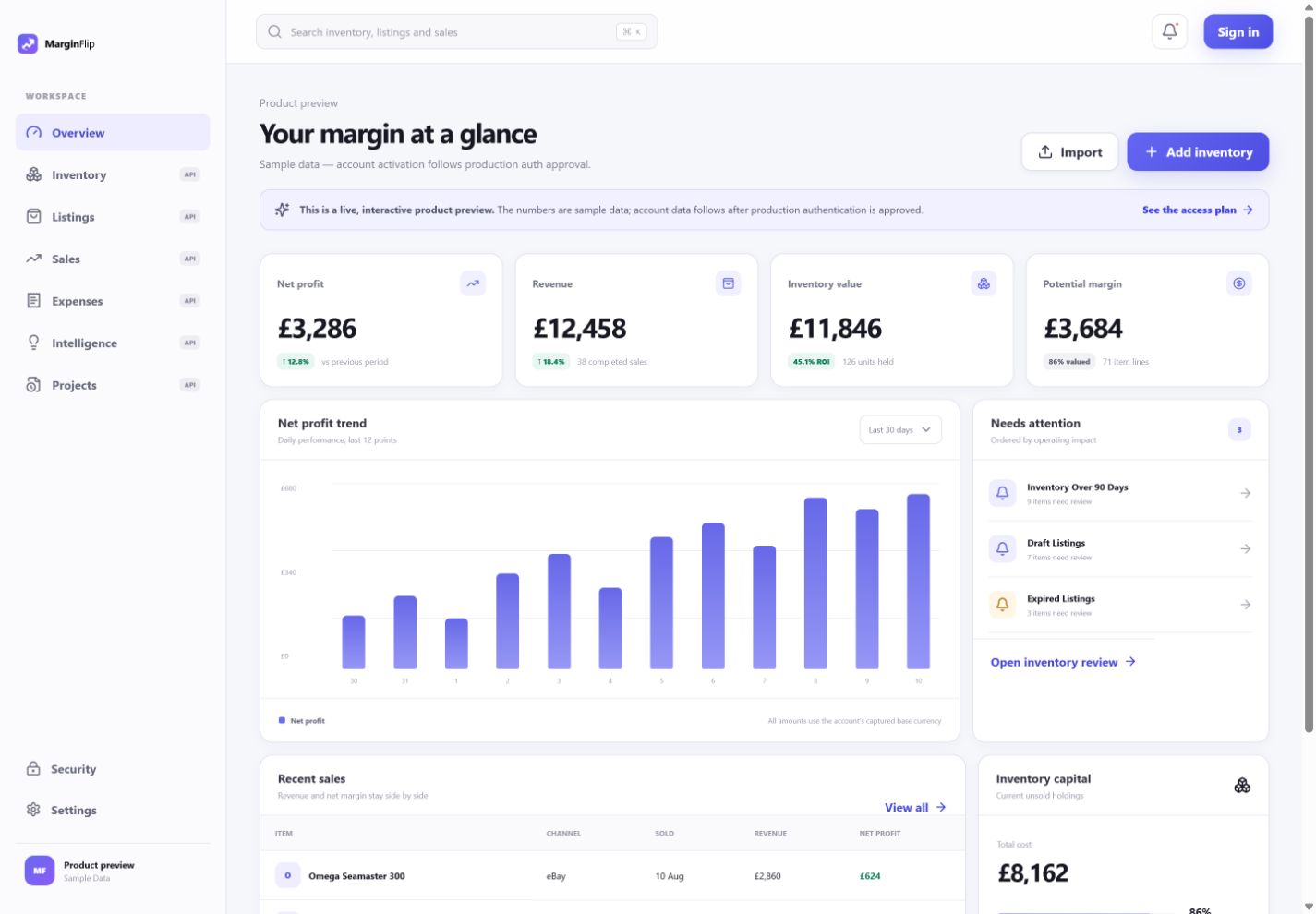
The step from static product cards to an inspectable, keyboard-operable proof reader with real downloadable samples.
Open the build journey →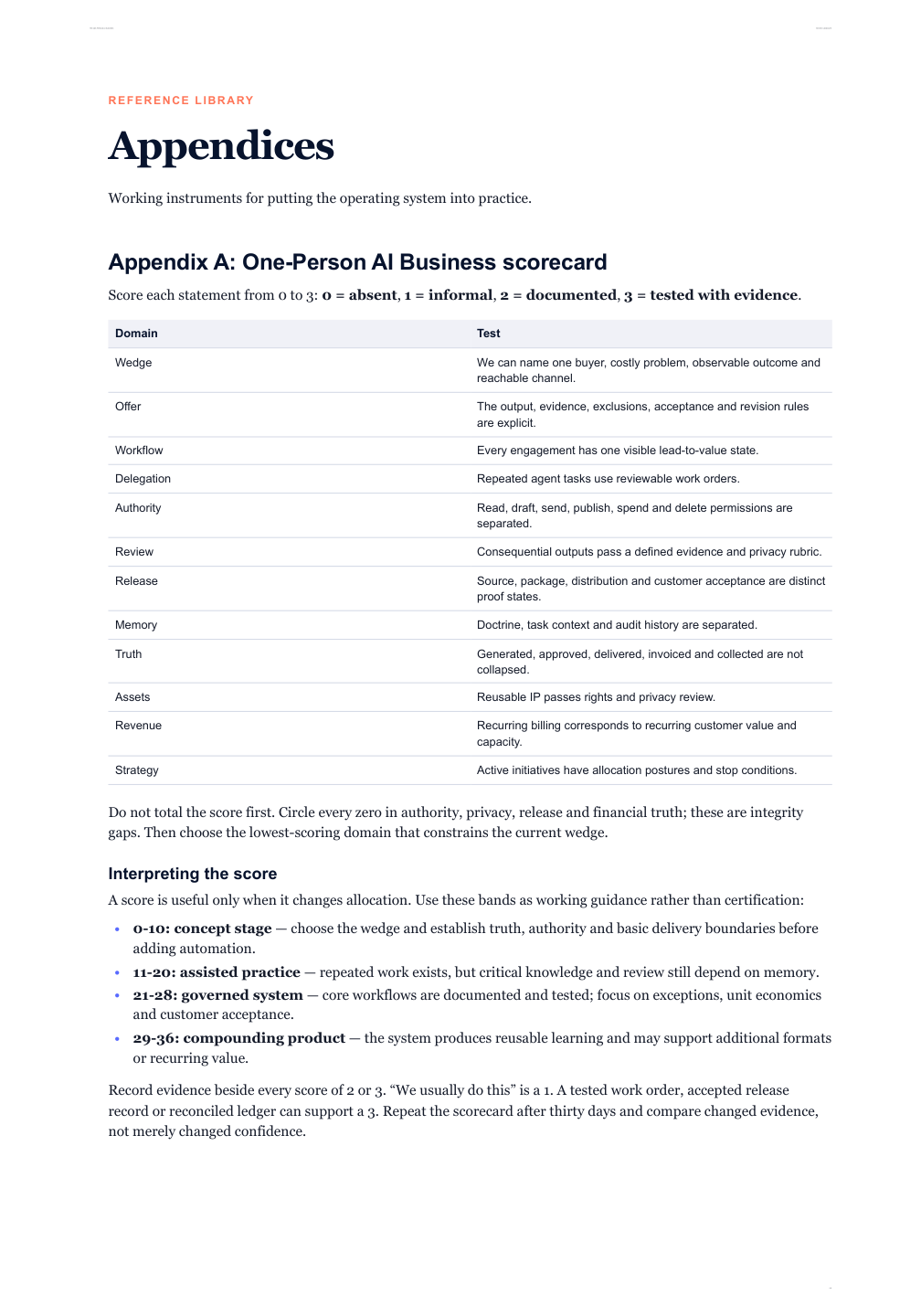
How the service catalogue became twelve outcome-led offers with linked project proof and honest commercial boundaries.
Open the build journey →How V1.0.7 changed packaged QA from a screenshot exercise into a rendered-page gate and proved the signed clean-install and updater path.
Open the build journey →A six-route media refresh that made Web, Studio, Voice, Pricing, Tools and Security tell one current product story.
Open the build journey →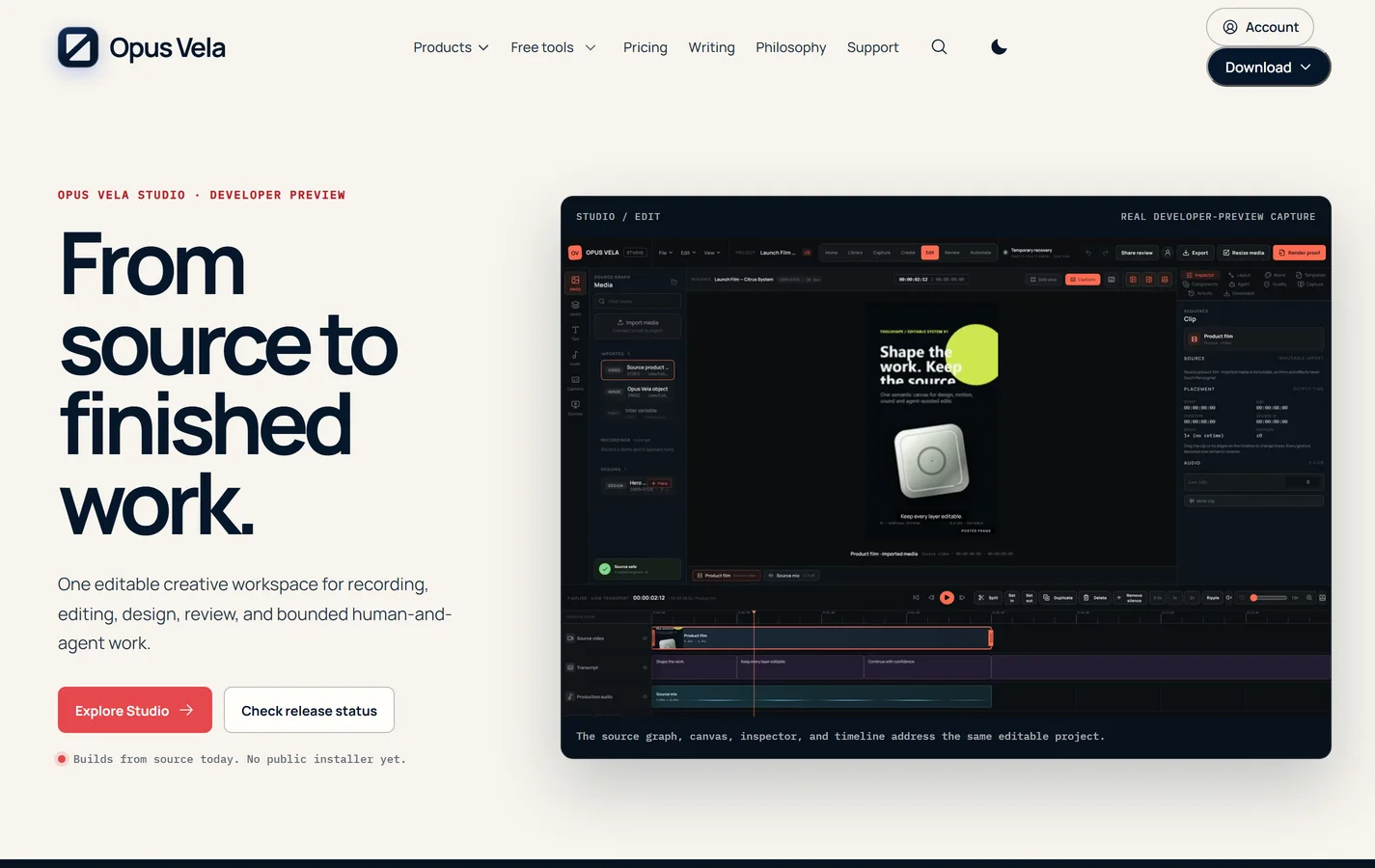
The pass that reconciled public identities, honest release labels, real routes and 320-pixel project layouts.
Open the build journey →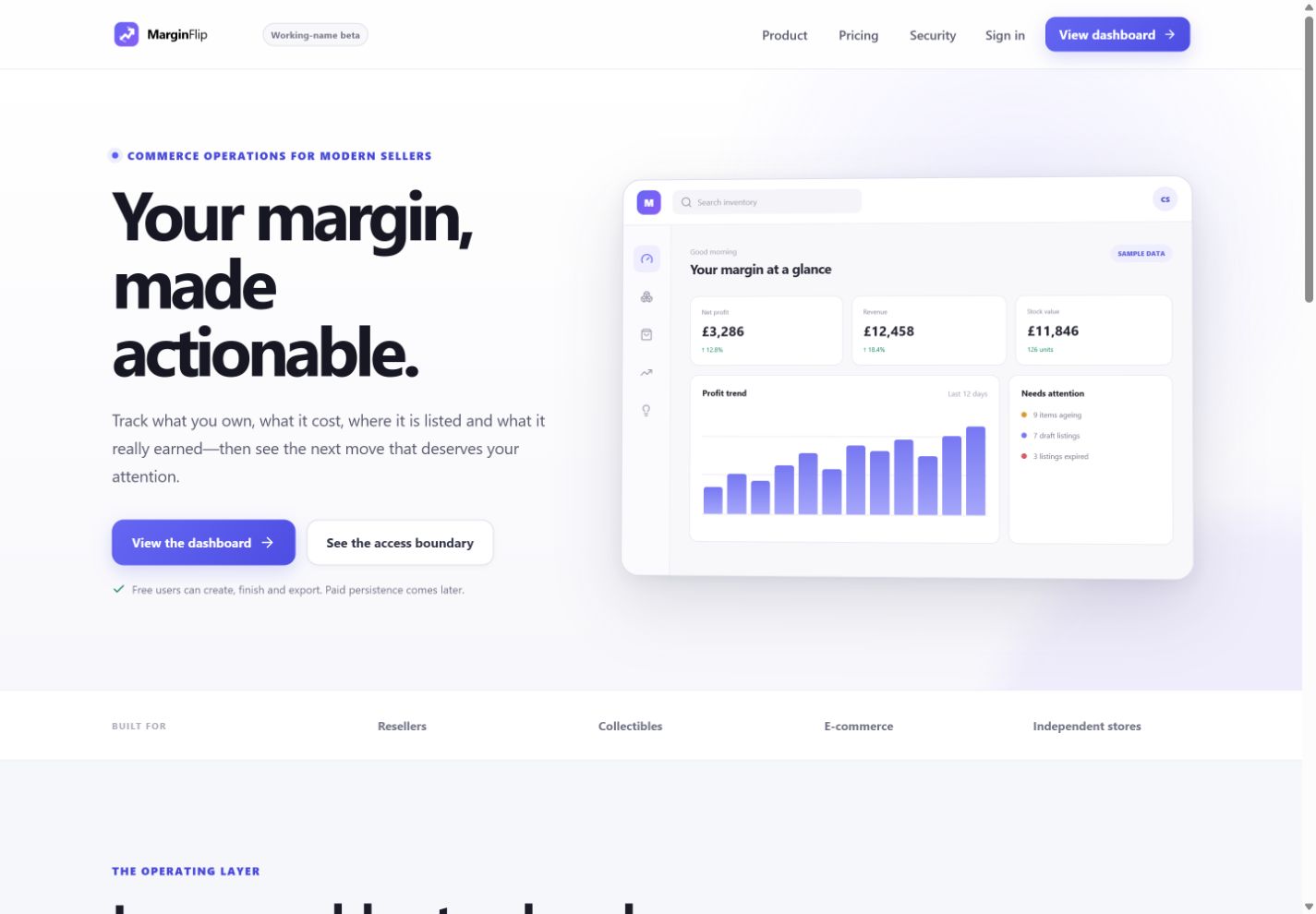
How project evidence gained swipe, zoom, focus restoration and a usable phone-sized inspection surface.
Open the build journey →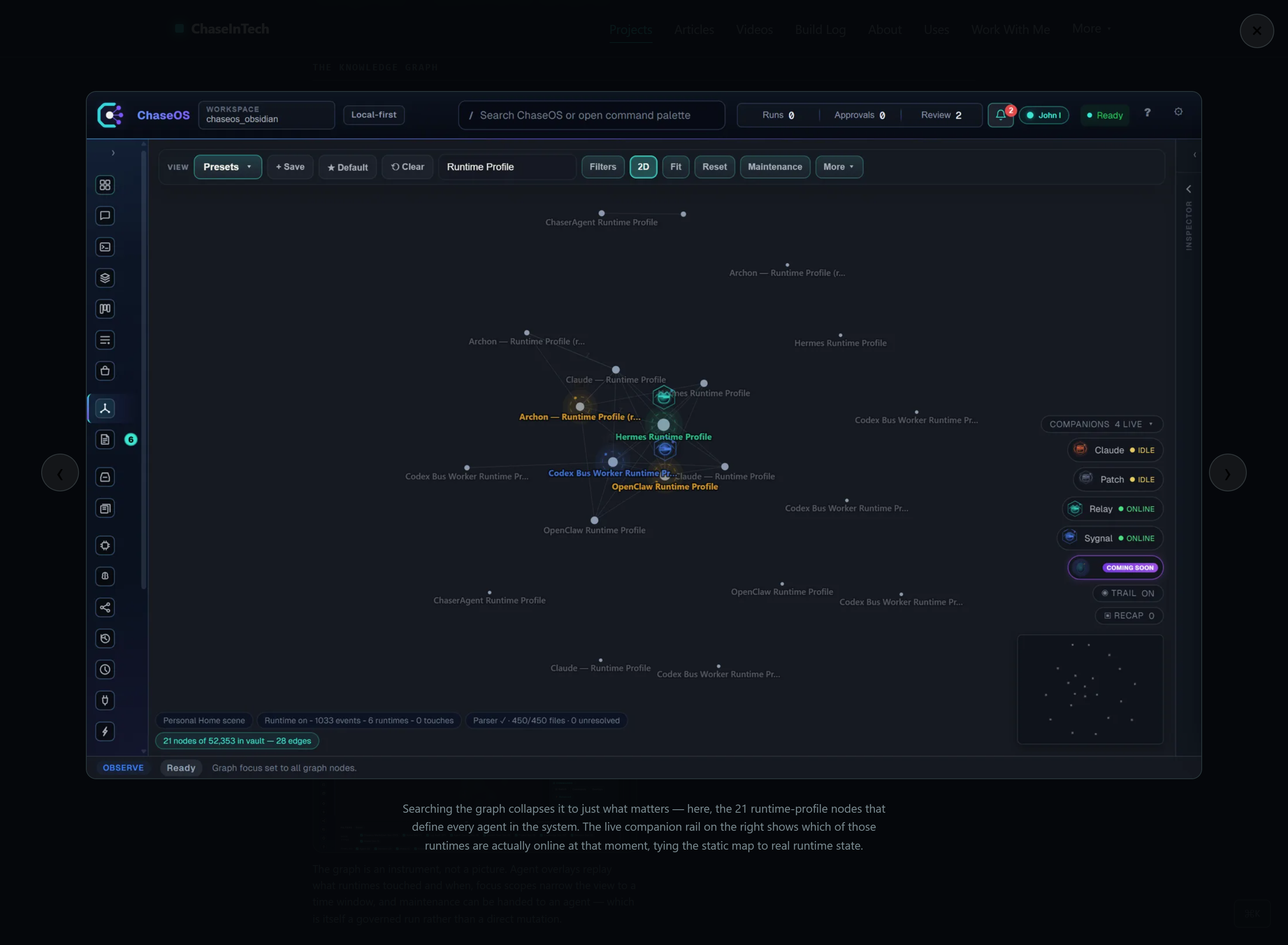
A small mobile-menu failure exposed a larger lesson about client navigation, replaced DOM and resilient event binding.
Open the build journey →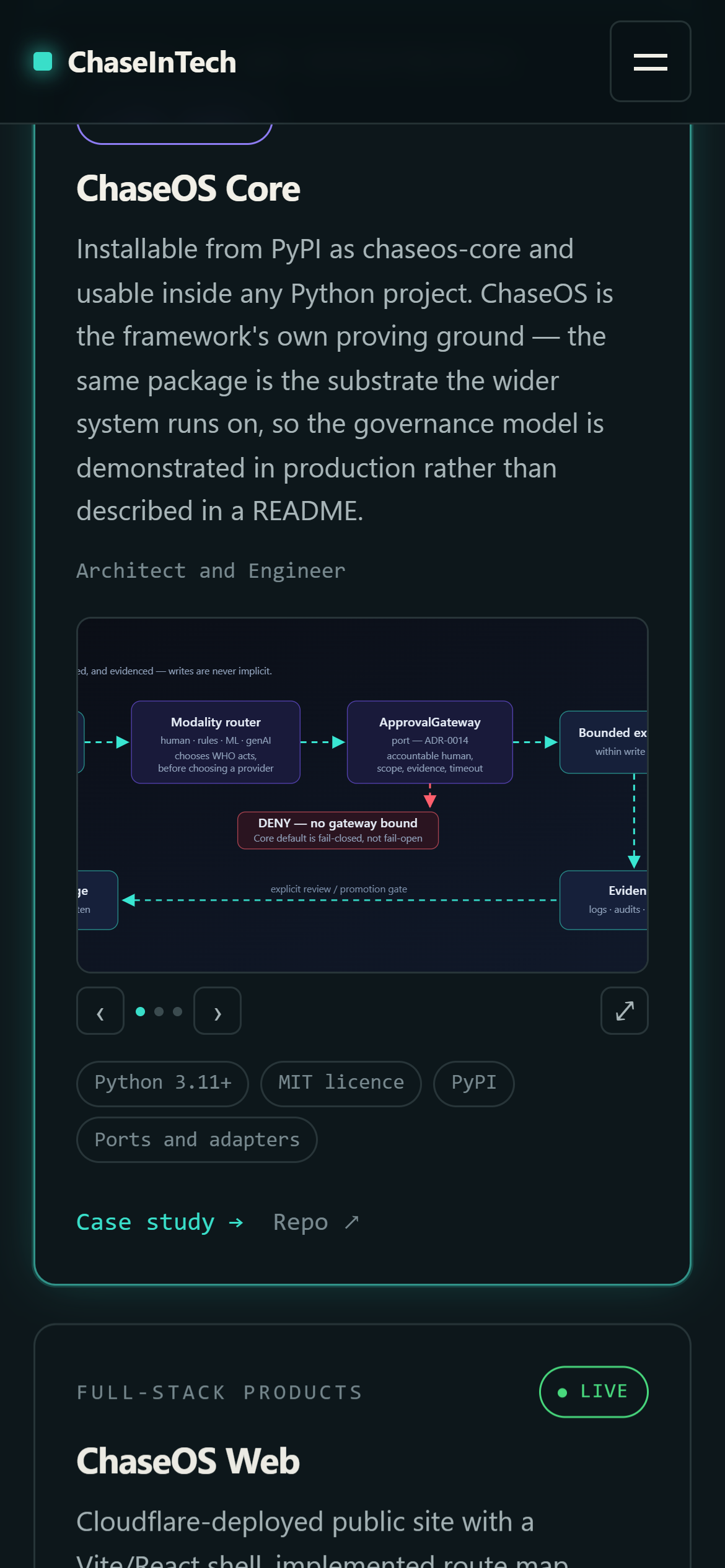
How the ChaseOS front door exposes a real waitlist and product story while keeping downloads, checkout, admin export and managed-agent claims behind explicit gates.
Open the build journey →How GreyTheory separates raw signals, deterministic validation, model-assisted reasoning and human authority—before anything can become a reportable finding.
Open the build journey →How TradeSync separates scoring, risk review and execution authority—and why its public cockpit had to distinguish demo data from paper operation before live trading could even be discussed.
Open the build journey →Why Opus Vela Studio starts with a semantic kernel, typed operations and state-based verification instead of teaching an agent to click around a creative editor.
Open the build journey →The operational step from a deployed website to a domain property with a readable sitemap and verified privacy-aware analytics.
Open the build journey →How an anonymous CI failure became a reproducible 18-pixel mobile overflow and a stronger browser-reporting system.
Open the build journey →Cloud is planned, not live — but its billing architecture is already specified. Notes on the single-chokepoint meter, the reserve-execute-settle state machine, and why the local path is free by construction.
Open the build journey →Why an inventory app for resellers supports both Firebase and SQLite behind the same Flask backend, and what the dual-mode abstraction costs.
Open the build journey →Why the first version of Chaser Agent deliberately has no authority, and what a review-first output artifact has to separate to be worth reading.
Open the build journey →The approval boundary is the most-used surface in ChaseOS. Notes on why the governance layer earned first-class status instead of being bolted on.
Open the build journey →20 Mar 2026 → 13 Jul 2026
How build logs, runtime activity, evidence and reviewed lessons stay distinct—then become useful context for future agent work without silently becoming truth.
Open the build journey →No matches