AI and automation
AI agent development
Build AI agents around a defined task, with suitable models, tools and context. Decide what they can do, when they need approval and how to recover if a run fails.
Before we start. The agent only receives agreed permissions. Sensitive actions need the approval rules set for the project. Ongoing operation and new integrations are scoped separately.
The purpose
Expected outcomes
- A defined task and suitable agent tools
- Clear approval and recovery rules
- A tested pilot and operating guide
Agree the work
Scope and what I need from you
Start with a description. Access to private systems or files is arranged only after the work and handling terms are agreed.
Useful information for the discussion
- The workflow and people involved
- Tools and data the agent may use
- Actions that must stay with a person
Before the first reply
What I'll ask you.
Agents are scoped around one real task. These answers decide what the agent may do and where a person stays in charge.
- Which task or workflow should the agent take on?For example: Triage incoming support emails and draft replies for review
- Who does this today, and how often?For example: Two support staff, about 120 emails a day
- Which tools and data may the agent use?For example: Help Scout, our product docs, read-only access to the customer database
- Which actions must always stay with a person?For example: Refunds, account deletions and anything sent to a customer
- How will you know the pilot worked?For example: Drafts accepted with few edits, response time under two hours
Explore the process
How the work happens
An illustrated example, from the first request to handover.
An agent prepares internal support replies
Use the steps below to inspect the work and expected output.
Step 1 of 4
Choose a bounded support task
Map the incoming request, available documents and the person responsible for a reply. Agree which information the agent may read.
A task definition and authorised sources.
Step 2 of 4
Give the agent the tools it needs
Connect the agreed search and drafting tools. Keep send actions separate from preparing a draft, and record what each tool can change.
A working tool path with limited permissions.
Step 3 of 4
Test approval and refusal paths
Try representative requests, missing information and tool failures. Check that higher-risk actions stop for a person's decision.
Recorded checks of useful and refused actions.
Step 4 of 4
Review the pilot and hand over
Run the agreed acceptance cases and explain how to inspect activity, handle a failed run and stop the workflow.
A tested pilot, limits and operating guide.
The handover
What you receive.
The agreed handover draws from these deliverables:
- Workflow, permissions and risk review
- Agent framework, model and tool selection
- Approval rules, saved context and activity records
- Working pilot, tests and handover guide
Outstanding issues and agreed next steps are recorded with the handover.
Inspect related work
Examples you can review.
Chaser Agent
An open-source, review-first agent harness: each run produces evidence-linked work you can inspect before an agent is given more authority.
The project record includes its current status and verification notes.
Read the Chaser Agent project record →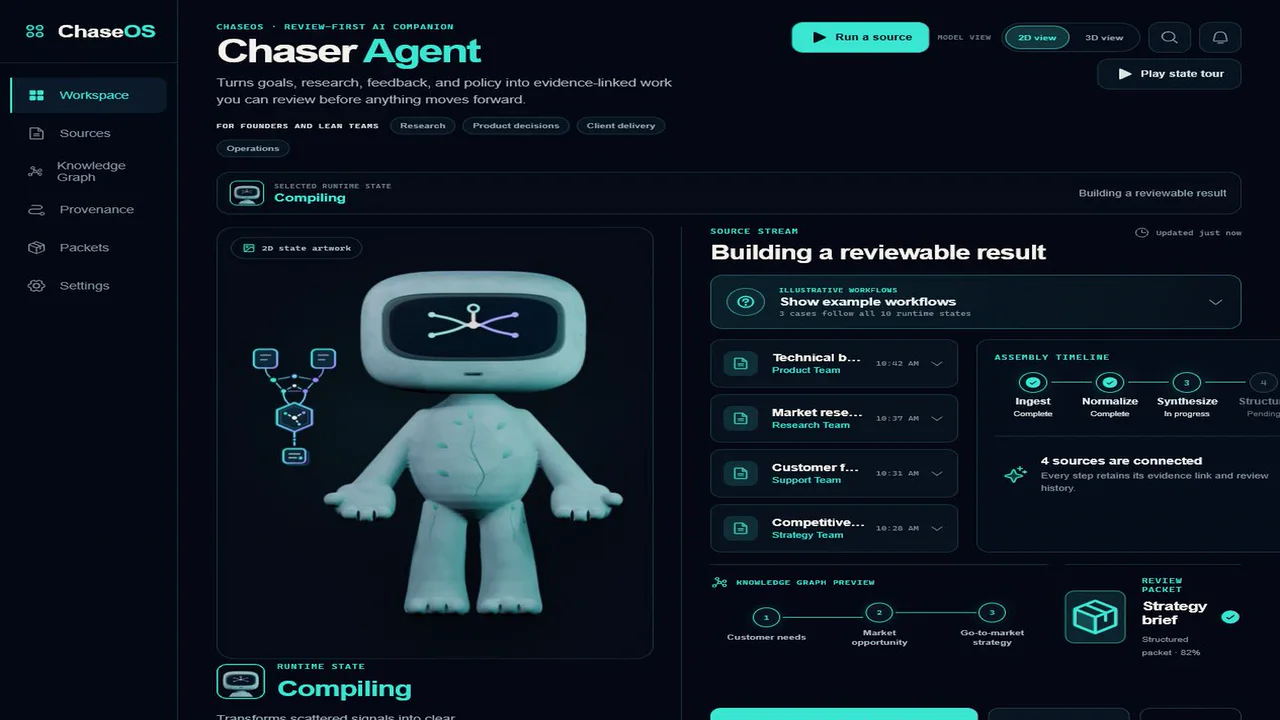
Before you enquire
Common questions.
Will it send messages or change records by itself?
Only where the agreed permissions allow it. The initial task defines which actions require review and how to stop or recover the workflow.
What will you ask me before we start?
Agents are scoped around one real task. These answers decide what the agent may do and where a person stays in charge. The 5 questions are listed on this page under "What I'll ask you". You can answer them on the enquiry page, then email or copy the brief.
How is the final price agreed?
The catalogue price is a starting point. The proposal confirms the scope, delivery stages, fees, provider costs and acceptance checks before work begins.
What happens after delivery?
You receive the agreed handover and remaining-issue notes. Additional features, continued operation and support are scoped separately.
Get in touch
Tell me what you need.
Describe the current system, the outcome you want, your timeline and a rough budget. Do not include credentials or private files in the initial enquiry.