Architecture and reviews
Software architecture and project planning
Plan your software architecture, integrations and development stages before committing to a larger build. Record the main decisions, risks and trade-offs.
Before we start. This is planning work. Implementation, migration and production operation are separately scoped; a diagram is not proof that a system has been built.
The purpose
Expected outcomes
- A system map and recorded decisions
- A review of risks and dependencies
- A phased implementation recommendation
Agree the work
Scope and what I need from you
Start with a description. Access to private systems or files is arranged only after the work and handling terms are agreed.
Useful information for the discussion
- The product idea or existing system
- Users, integrations and constraints
- Budget, delivery priorities and team context
Before the first reply
What I'll ask you.
A plan is only useful against real constraints, so these set the shape of the decision.
- What is the product or system, and what stage is it at?
- Who uses it, and what must it connect to?
- What decision does the plan need to support?For example: Whether to rebuild or extend the current system
- Who will build it?For example: Two in-house developers; open to outside help
Explore the process
How the work happens
An illustrated example, from the first request to handover.
A founder needs a plan before development
Use the steps below to inspect the work and expected output.
Step 1 of 4
Understand the problem and constraints
Identify users, data, integrations and the decisions the plan must support. Record assumptions that still need evidence.
A problem statement and constraints.
Step 2 of 4
Compare the main technical approaches
Map components, interfaces and important trade-offs. Explain which choices matter now and which can wait.
A system map and option review.
Step 3 of 4
Check the plan against real constraints
Review dependencies, security, delivery risks and build-versus-buy choices with the available evidence.
Recorded decisions and unresolved risks.
Step 4 of 4
Prepare a practical first phase
Set out the proposed sequence, acceptance checks and information needed before implementation is commissioned.
A phased plan for the next decision.
The handover
What you receive.
The agreed handover draws from these deliverables:
- System map and key decisions
- Risk, dependency and scope review
- Phased implementation plan
- Build-versus-buy and team recommendations
Outstanding issues and agreed next steps are recorded with the handover.
Inspect related work
Examples you can review.
ChaseOS Core
A framework that routes requests, checks permissions and records whether an action was approved or denied.
The project record includes its current status and verification notes.
Read the ChaseOS Core project record →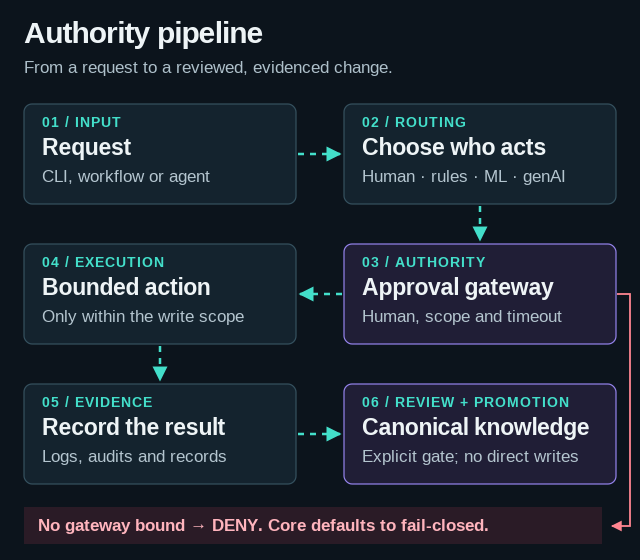
Before you enquire
Common questions.
Does the architecture engagement include building the application?
No. It produces the agreed plan and recommendations. Implementation requires a separate proposal.
What will you ask me before we start?
A plan is only useful against real constraints, so these set the shape of the decision. The 4 questions are listed on this page under "What I'll ask you". You can answer them on the enquiry page, then email or copy the brief.
How is the final price agreed?
The catalogue price is a starting point. The proposal confirms the scope, delivery stages, fees, provider costs and acceptance checks before work begins.
What happens after delivery?
You receive the agreed handover and remaining-issue notes. Additional features, continued operation and support are scoped separately.
Get in touch
Tell me what you need.
Describe the current system, the outcome you want, your timeline and a rough budget. Do not include credentials or private files in the initial enquiry.