Architecture and reviews
Code and product reviews
Review your product or codebase, explain the important issues and give you a prioritised plan for fixing them.
Before we start. The review covers the agreed material and checks. Implementing fixes or providing a certification is not implied by an assessment fee.
The purpose
Expected outcomes
- An evidence-based product or code review
- A prioritised list of issues
- A practical fix plan and readout
Agree the work
Scope and what I need from you
Start with a description. Access to private systems or files is arranged only after the work and handling terms are agreed.
Useful information for the discussion
- The reviewable codebase or application
- Known problems and current release state
- The specific decision the review should support
Before the first reply
What I'll ask you.
A review is aimed at one decision. These say what to look at and what you need to decide.
- What should be reviewed?A codebase, a live app or both.For example: Our React and Node app, about 40,000 lines
- What state is it in?For example: Live with 300 paying users; releases have slowed down
- Which problems do you already know about?
- What decision should the review help you make?For example: Whether to fix the current code or start again
- How could the code or app be shared for review?For example: Read-only GitHub access
Explore the process
How the work happens
An illustrated example, from the first request to handover.
A team takes over an unfamiliar application
Use the steps below to inspect the work and expected output.
Step 1 of 4
Define the questions and access
Agree which code, environments and user journeys can be inspected. Identify the decisions the review must help the team make.
A bounded review plan.
Step 2 of 4
Compare the application with its records
Review the code and available release evidence. Exercise the agreed journeys and note gaps that cannot be verified.
Findings tied to inspected material.
Step 3 of 4
Explain what matters first
Separate urgent weaknesses, improvements and missing evidence. Explain their practical impact and proposed next checks.
A prioritised issue and fix plan.
Step 4 of 4
Give the team a useful readout
Present the findings, remaining questions and a proposed sequence. Any implementation is agreed separately.
A written review and technical readout.
The handover
What you receive.
The agreed handover draws from these deliverables:
- Codebase and product review
- Prioritised findings with evidence
- Fix plan and acceptance checks
- Summary report and technical findings
Outstanding issues and agreed next steps are recorded with the handover.
Inspect related work
Examples you can review.
MarginFlip
Onboarding, charts and feature limits checked against the working application.
The project record includes its current status and verification notes.
Read the MarginFlip project record →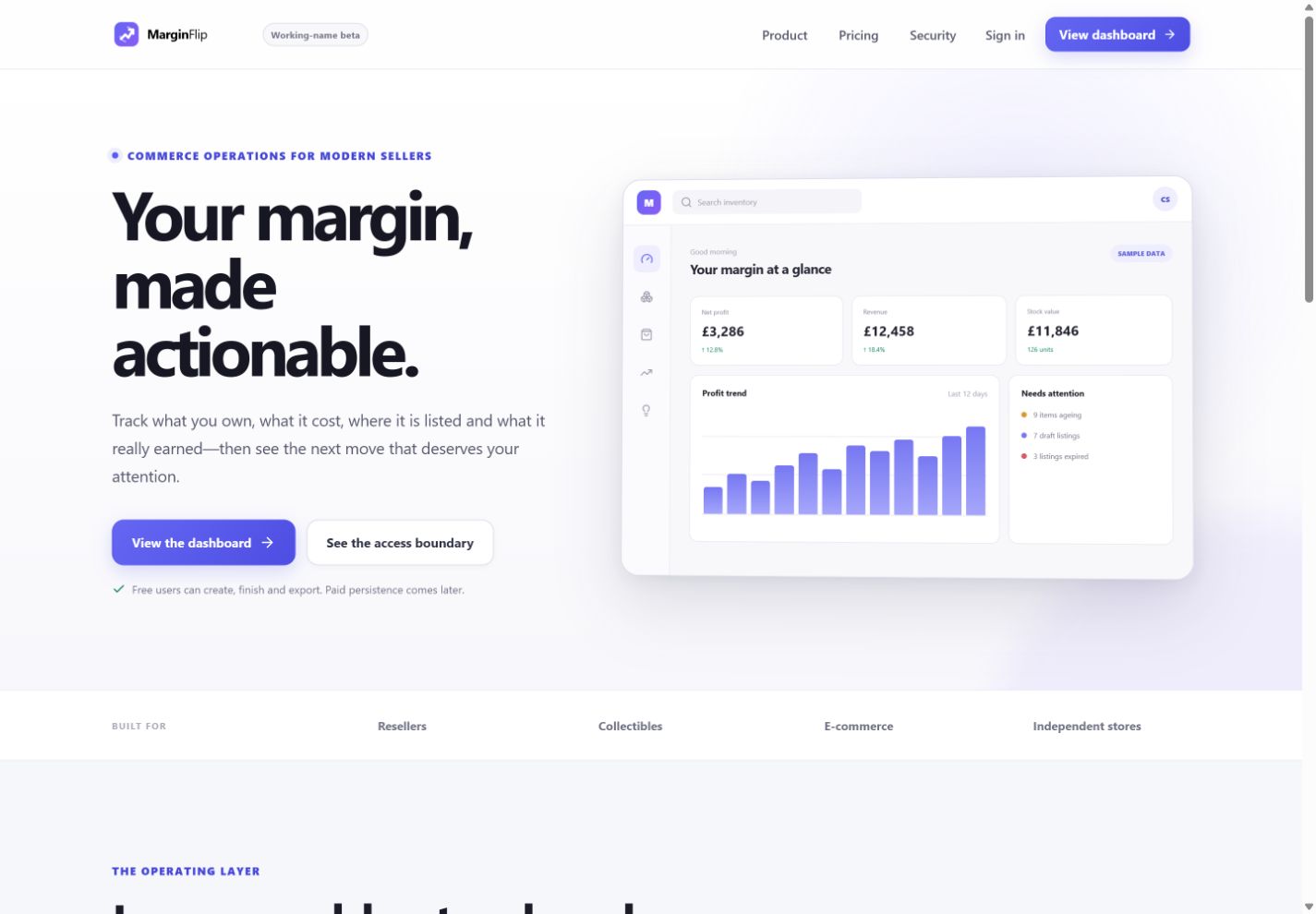
Before you enquire
Common questions.
Will the review include fixing everything it finds?
No. The review produces the agreed findings and plan. A separate scope can cover selected fixes.
What will you ask me before we start?
A review is aimed at one decision. These say what to look at and what you need to decide. The 5 questions are listed on this page under "What I'll ask you". You can answer them on the enquiry page, then email or copy the brief.
How is the final price agreed?
The catalogue price is a starting point. The proposal confirms the scope, delivery stages, fees, provider costs and acceptance checks before work begins.
What happens after delivery?
You receive the agreed handover and remaining-issue notes. Additional features, continued operation and support are scoped separately.
Get in touch
Tell me what you need.
Describe the current system, the outcome you want, your timeline and a rough budget. Do not include credentials or private files in the initial enquiry.