Security and hardening
Software security and hardening
Review sign-in, access controls, secrets, dependencies and sensitive actions. Agree any authorised testing in writing, prioritise the findings, implement agreed fixes and retest them before handover.
Before we start. Testing stays within written authorisation. This service does not imply penetration-test certification, unrestricted testing, or a guarantee that software has no vulnerabilities.
The purpose
Expected outcomes
- A written authorised review scope
- Prioritised findings and agreed changes
- Retest evidence and remaining-risk notes
Agree the work
Scope and what I need from you
Start with a description. Access to private systems or files is arranged only after the work and handling terms are agreed.
Useful information for the discussion
- The application and release being reviewed
- Written permission and access boundaries
- Known concerns and relevant source or configuration
Before the first reply
What I'll ask you.
Security testing only happens with written permission, so these set what is in scope.
- Which application or system, and what stage is it at?For example: Customer portal, live, about 2,000 users
- Who can give written permission for testing?For example: Our CTO
- What are you most concerned about?For example: Staff accounts, admin actions and API keys in the code
- What sensitive data or actions does it handle?
- Is there a deadline, such as an audit or a client review?
Explore the process
How the work happens
An illustrated example, from the first request to handover.
A small SaaS is preparing to launch
Use the steps below to inspect the work and expected output.
Step 1 of 4
Define the release and its risks
Identify the application, users, data and deployment being reviewed. Agree access and permitted checks before touching the system.
A written review scope and access boundaries.
Step 2 of 4
Review access, secrets and dependencies
Inspect roles, refused actions, configuration and dependencies within the agreed scope. Tie each finding to the material actually reviewed.
Recorded findings and their limits.
Step 3 of 4
Prioritise the changes
Rank the findings and make the approved changes in reviewable stages. Record decisions and issues left outside the work.
A priority list and change record.
Step 4 of 4
Check the result before handover
Repeat the relevant checks and record the remaining risks, release notes and operating actions.
Retest evidence and a risk handover.
The handover
What you receive.
The agreed handover draws from these deliverables:
- Written testing scope, permissions and threat review
- Sign-in, role and access-control checks, including refused actions
- Secrets, dependency and sensitive-data handling review
- Prioritised findings and agreed fixes with recorded retest results
- Release and rollback checklist, remaining risks and operating handover
Outstanding issues and agreed next steps are recorded with the handover.
Inspect related work
Examples you can review.
ChaseOS Core
An open-source framework that refuses protected actions until a permission policy is in place, keeps credentials out of the public code and scans for leaked secrets before release.
The project record includes its current status and verification notes.
Read the ChaseOS Core project record →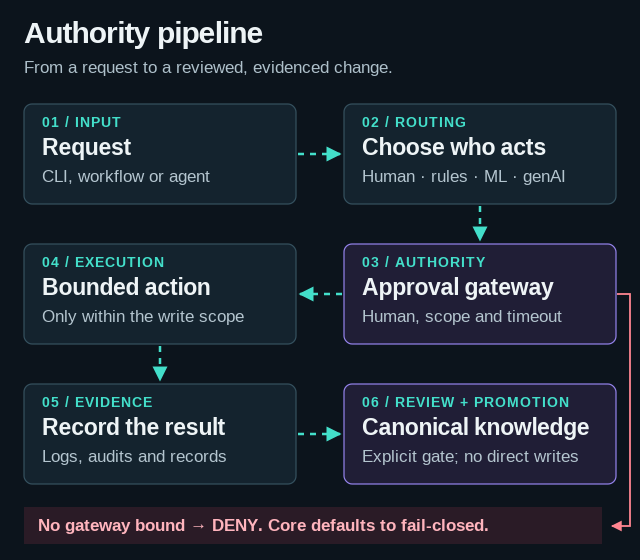
Before you enquire
Common questions.
Is this a security certification or an unrestricted penetration test?
No. The proposal names the authorised review and testing scope. Any specialist certification or further testing needs its own qualified provider and agreement.
What will you ask me before we start?
Security testing only happens with written permission, so these set what is in scope. The 5 questions are listed on this page under "What I'll ask you". You can answer them on the enquiry page, then email or copy the brief.
How is the final price agreed?
The catalogue price is a starting point. The proposal confirms the scope, delivery stages, fees, provider costs and acceptance checks before work begins.
What happens after delivery?
You receive the agreed handover and remaining-issue notes. Additional features, continued operation and support are scoped separately.
Get in touch
Tell me what you need.
Describe the current system, the outcome you want, your timeline and a rough budget. Do not include credentials or private files in the initial enquiry.